
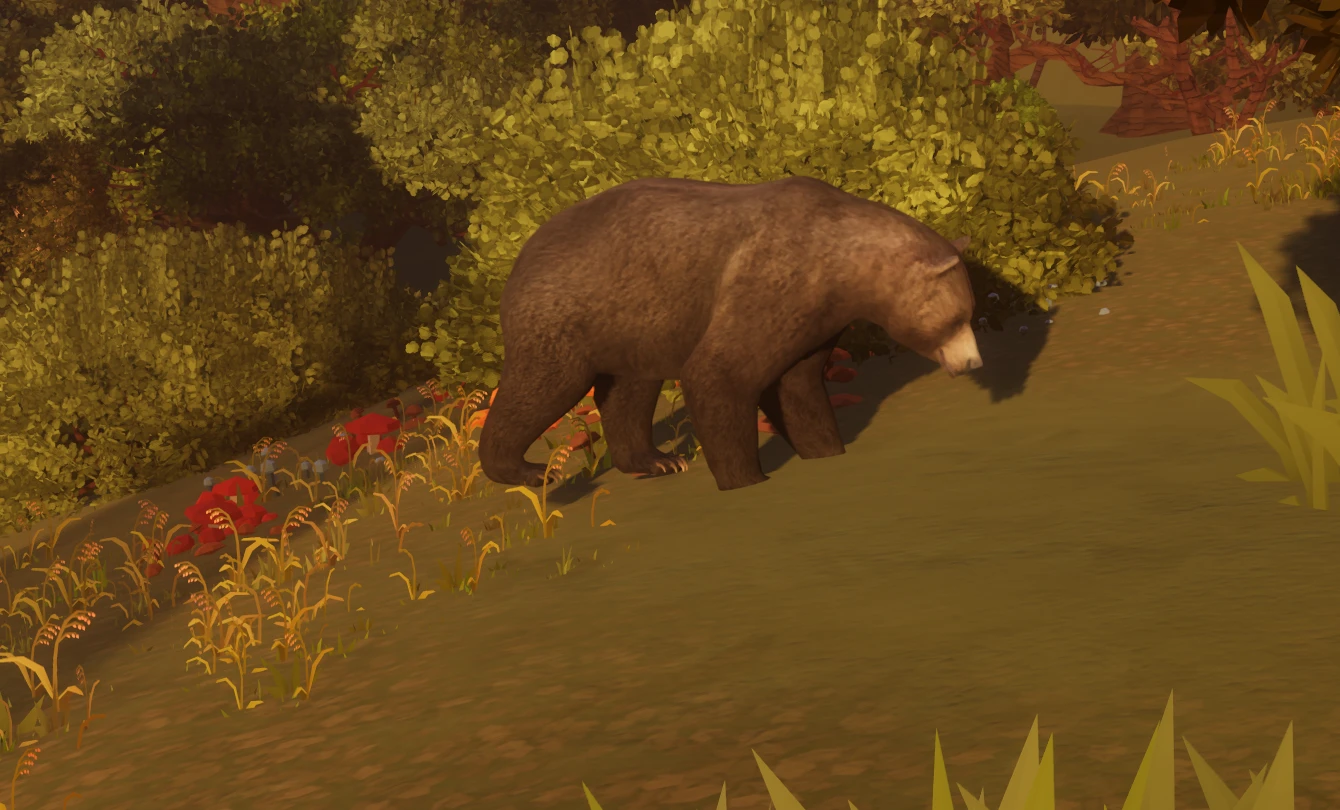
A brown bear moving through woodland

Wildlife

Herds, families, and encounters in a world that lives around you.

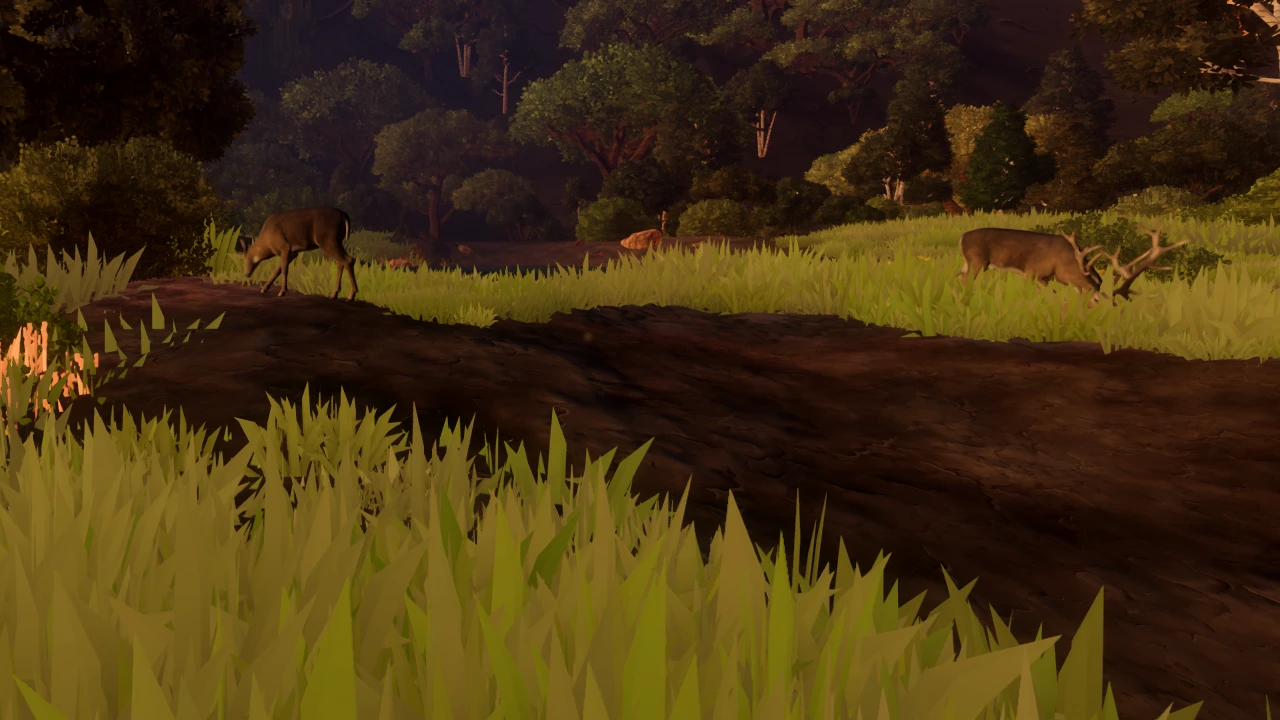
A doe and stag grazing at the edge of a woodland clearing

Herds and alarm

A grazing deer may finish a mouthful before looking up. A startled one raises its head sharply. Nearby deer notice the change, and alarm spreads through the herd.

Your pace and direction matter. Walking straight toward an animal puts it under more pressure than passing at a distance. After fleeing, it remains wary; reaching cover helps it settle.
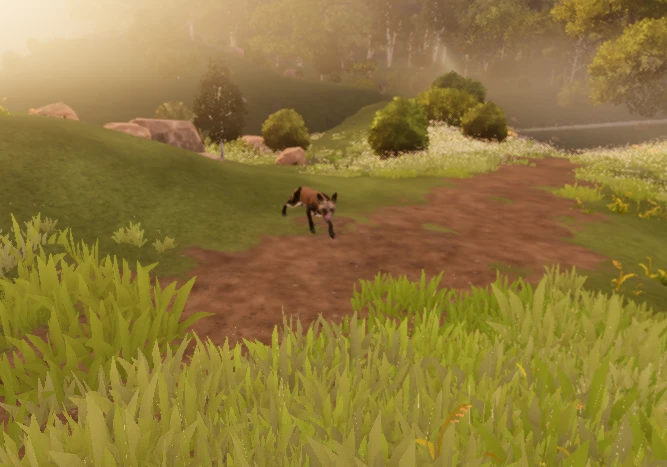
A red fox crossing a grassy path beside a pond

Territory and encounters

Foxes and wolves patrol and mark their ground. Rivals may challenge one another or give way. Prey react to nearby predators, and crows can gather around a hunter and interrupt its approach.

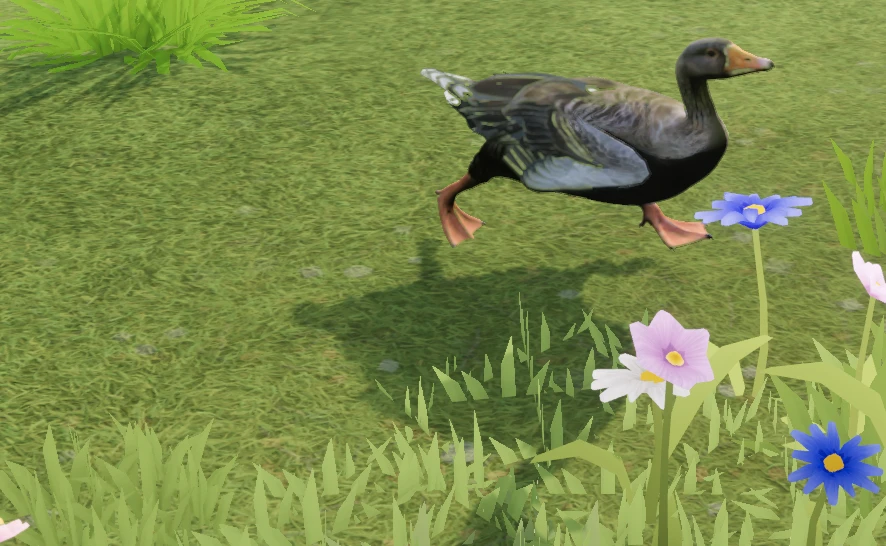
A goose moving through grass and wildflowers

Flocks and migration

A goose calls as its flock prepares to take off. Geese form a V, ducks fly in a close group, and pheasants flush separately. Migrating geese pass overhead in spring and autumn, changing leaders in flight.

Individual lives

In worlds you create, animals have their own coats, families, and lifespans. Return to the same place and you can learn to recognize particular animals as they grow older.

Families
Young stay close to their mothers and play. Mothers spend more time keeping watch and may stand their ground to protect their young.
Age
Yearlings range farther from the herd. Older animals walk more slowly, rest more often, and give way to younger rivals.
Recognition
Photograph an individual to record it in your field journal. The camera recognizes animals you know, and you can give them names.
A brown bear moving through a wooded clearing